
Transforming Small Spaces: Smart Renovation Ideas for Sydney Homes
Updated: Sep 8
Small kitchens and tired bathrooms often fail for the same reason: every centimetre works too hard, but not hard enough. The latest renovation ideas focus less on adding more and more on making smarter choices. This includes wall-hung vanities, hidden appliance zones, and warm, durable finishes.
A good makeover should feel better on day one and still work well in five years. This means planning storage before tiles, choosing materials that suit real life, and using colour to shape the room rather than simply decorate it.

Space-Saving Ideas Are Leading the Renovation Wish List
The strongest trend in bathrooms and kitchens is smarter use of space. Homeowners want rooms that feel open, even when the footprint stays the same.
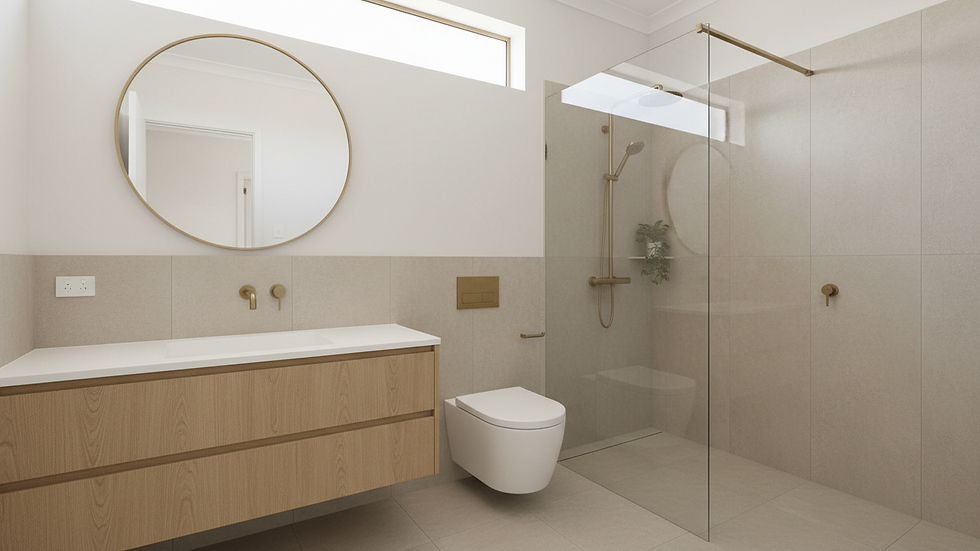
In bathrooms, wall-hung vanities remain popular because they expose more floor space. That one detail can make a narrow ensuite feel lighter. Recessed shaving cabinets also help, especially when they include power points for toothbrushes or shavers. In showers, a single fixed glass panel often feels less cramped than a swinging door.
In kitchens, the focus has shifted to hidden work zones. Appliance cupboards keep toasters, kettles, and coffee machines off the bench. Tall pull-out pantries make narrow gaps useful. Deep drawers are replacing many lower cupboards because they allow people to see everything at once.
Practical space savers worth planning early include:
Pocket doors: Ideal for laundries, ensuites, and pantries where a hinged door steals usable space.
Full-height storage: Best for kitchens with standard ceilings, especially when less-used items can sit higher.
Niche shelving: Useful in showers, above baths, and beside cooktops when planned before waterproofing or splashbacks.
Slim fixtures: Compact toilets, narrow vanities, and single-bowl sinks can free up valuable movement space.
The key is to avoid filling every wall. A small room needs breathing room as much as storage.
Materials Are Becoming Warmer, Tougher, and Easier to Maintain
The all-white kitchen or bathroom still has its place, but many renovations now use texture to add warmth. Timber-look laminates, fluted cabinetry, handmade-look tiles, and stone-look porcelain are popular because they bring character without demanding high maintenance.
Porcelain panels and large-format tiles are also gaining ground. They reduce grout lines, which helps small bathrooms feel calmer and makes cleaning easier. In kitchens, engineered stone alternatives, porcelain benchtops, and laminate surfaces are common choices for those balancing style, durability, and cost.
Brushed finishes are replacing shiny chrome in many projects. Brushed nickel, gunmetal, and warm brass can soften a room. Matte black still works well, but it shows water marks more clearly in some homes, especially in hard-water areas.

Strategies for Applying Feature Materials
To achieve impactful results while utilizing feature materials, consider the following approaches:
1. Focus on Key Areas
Identify specific areas where feature materials can create the most visual impact. This could include:
Accent walls
Focal points in a room
High-traffic areas
2. Use Textures Wisely
Incorporate a variety of textures to enhance the overall aesthetic. Consider using:
Natural stone
Wood finishes
Metal accents
3. Combine Different Materials
Mix and match materials to create a unique look. This can involve:
Pairing glass with wood
Combining tiles with metals
Layering fabrics for added depth
4. Highlight Architectural Features
Use feature materials to accentuate existing architectural elements, such as:
Columns and beams
Fireplaces
Staircases
5. Consider Lighting
Lighting plays a crucial role in showcasing feature materials. Use:
Spotlights to highlight textures
Ambient lighting for a warm feel
Task lighting to draw attention to specific areas
6. Stay True to Your Style
Ensure that the materials you choose reflect your personal style and the overall theme of the space.
By strategically applying feature materials, you can achieve stunning results that enhance the beauty and functionality of your environment. A restrained material mix often looks more polished than a room packed with competing finishes.
Colour Schemes Are Softer but More Personal
Neutral colours are not disappearing, but they are becoming warmer. Cool greys have made way for clay, oat, mushroom, warm white, and sandy beige. These colours suit Australian light and pair well with timber, stone, and brushed metal.
Green remains a strong choice for bathrooms, especially sage, eucalyptus, and muted olive. Blue also works well, from soft powder blue to deep navy on lower kitchen cabinets. For bolder kitchens, terracotta and burgundy are appearing as accent colours, often on splashbacks or island joinery.
The easiest way to build a scheme is to choose one main colour, one texture, and one metal finish. For example:
Warm white walls
Light oak cabinetry
Brushed nickel tapware
Or:
Soft green tiles
White vanity or benchtop
Warm brass hardware
Small rooms usually work best with low contrast across large surfaces. Save stronger contrast for handles, mirrors, lights, or stools. This keeps the eye moving without chopping the space into pieces.
Before and After Examples Show What Really Changes a Room
A renovation does not need a larger footprint to feel dramatic. These examples show how targeted changes can transform everyday spaces.

Before | After |
A narrow kitchen had dark overhead cupboards, a small freestanding pantry and cluttered benches. | Full-height pantry storage moved to one wall, the upper cupboards changed to warm white, and an appliance cupboard cleared the bench. |
A dated bathroom had a bulky vanity, framed shower screen and poor lighting. | A wall-hung vanity, frameless glass panel, recessed cabinet and large-format floor tiles made it feel brighter and wider. |
A family kitchen had worn laminate, mismatched handles and little task lighting. | New door fronts, a practical laminate benchtop, LED strip lighting and simple brushed handles refreshed the room without moving plumbing. |
A compact ensuite had no storage except the vanity. | A shaving cabinet, shower niche and mirrored wall cabinet added storage without taking floor space. |
The lesson is simple: layout, light, and storage usually create the biggest visible gain. Finishes matter, but they work best when the room already functions well.
Budget-Friendly Updates Can Still Feel Custom
Not every stylish makeover needs a full strip-out. The smartest budget choices keep what works and replace what dates the room.
In a kitchen, repainting or refacing cabinet doors can change the whole mood. New handles, a tiled splashback, and updated lighting can make older joinery feel current. If the layout works, avoid moving plumbing or major electrical points unless there is a clear benefit.
In a bathroom, the biggest savings often come from keeping fixtures in the same position. A new vanity, mirror, tapware, and lighting can refresh the room while reducing extra trade work. Regrouting, replacing silicone, and upgrading accessories can also lift a bathroom that is structurally sound.
Spend more where touch and durability matter:
Benchtops that handle daily use
Quality hinges and drawer runners
Waterproofing and ventilation
Good task lighting
Tapware with a solid feel and suitable warranty
Save on items that can change later, such as paint colours, decorative lights, bar stools, towels, and styling pieces.
Plan the Room Around Daily Habits
Trends are useful, but habits should guide the final choices. A keen cook may need wider prep space and deep drawers more than a statement splashback. A busy household may value a double towel rail, extra power points, and easy-clean surfaces over decorative details.
Before choosing tiles or colours, map the daily routine. Where do wet towels go? Where does the coffee machine live? Can two people use the kitchen without bumping into each other? Is there a landing spot for groceries, school bags, or toiletries?
The best renovation creates a room that feels calm because everything has a place. Start with space, storage, and light. Then add materials and colours that bring warmth. With that order, even a modest bathroom or kitchen can become a stylish, space-saving makeover that works hard every day.


Comments